(This piece also appeared on BMWBLOG on Auguste 26th, 2026. You can check it out here.)
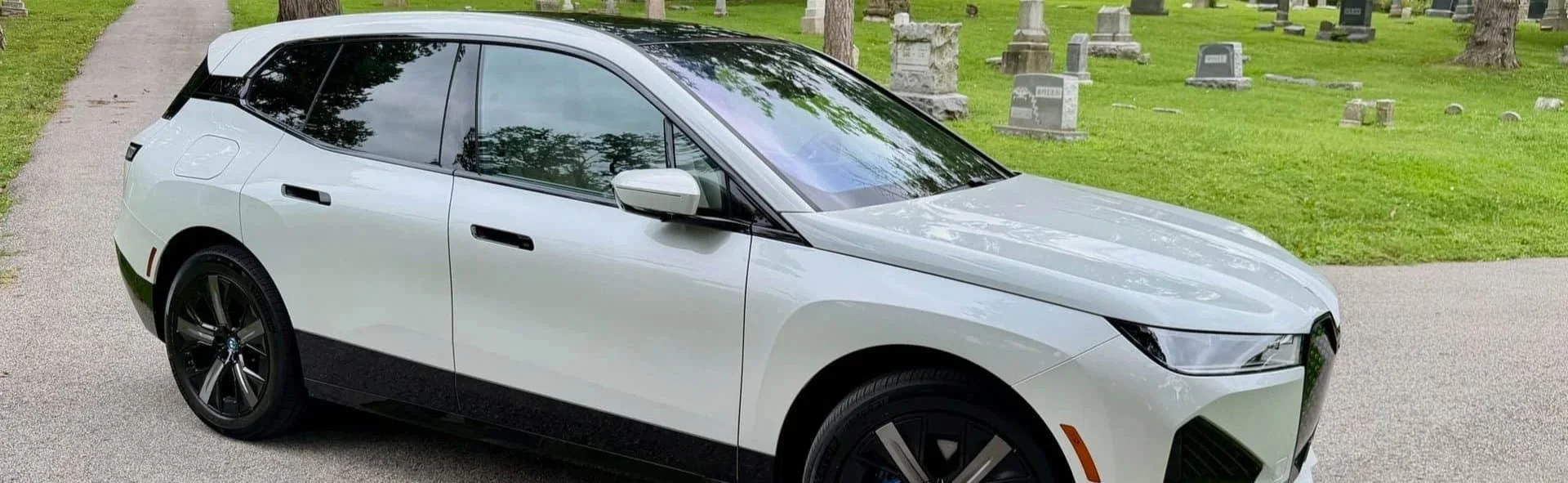
A cemetery might seem an odd place to shoot pictures of a luxury BMW. But given the iX’s overwhelming sense of serenity and calm, the symbolism seems apt. And, of course, the recent announcement of the iX’s “one and done” presence in the US market (and I’ll bet my allowance that soon becomes everywhere) makes the metaphor a bit more pointed. Call it “Requiem for a Heavyweight” (obligatory EV weight commentary entirely intended).
I’m BMWBLOG’s primary motorcycle guy, and a perfect day for me is finding a twisty road or rocky trail and letting rip on some fine Motorrad product. And when not on two wheels, I’m prone to sports cars or sports sedans. But even I have to go to Costco from time to time.
So last year, in June of 2025, when my wife and I were in the market for a versatile SUV, and wanting a pure EV since most of our local driving is urban, we were immediately drawn to the iX. So, after some discussions with the fine folks at Baron BMW in Merriam, KS, we found ourselves behind the wheel of a 2025 iX xDrive50 in Mineral White Metallic with Oyster Perforated SensaTech interior.
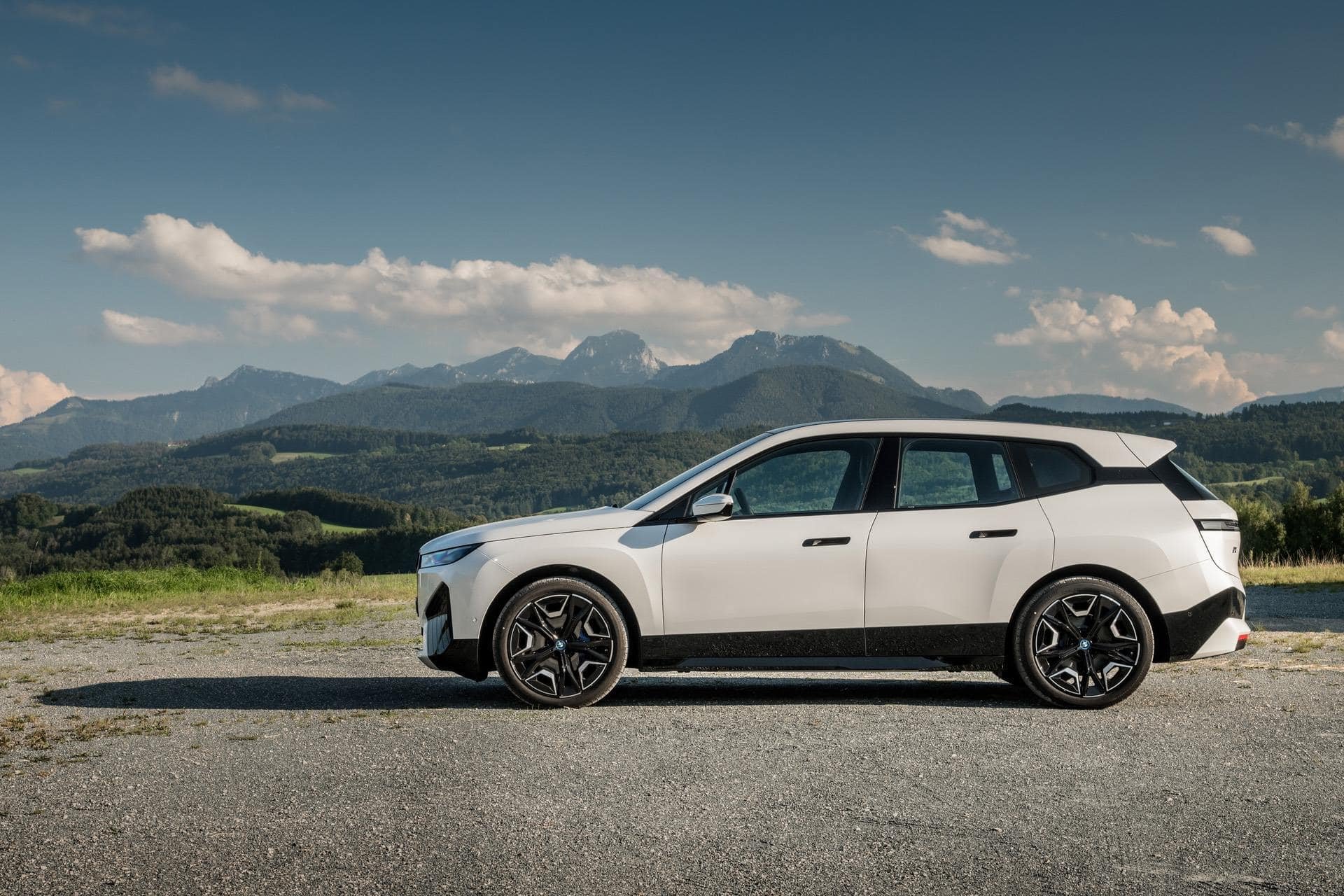
Our iX was significantly optioned, with the Driving Assistance Professional Package, Premium Package, Sport Package, and several other niceties including the Luxury Package, which included the Glass Controls my wife had always admired. As delivered, the vehicle retailed for $100,345, not an insignificant sum by any means. Given the depreciation cliff for EVs at the moment, we chose to lease our iX rather than buy, so we’ve got a three-year shakedown to explore what this iX has to offer.
One personal note is that this is the first vehicle I’ve procured from dealer stock in, oh, three decades I’m guessing. But we were highly motivated, so I put aside my tendency to configure my own and embraced this particular in-stock iX, which was spec’ed about how I would have anyway, with the exception of the color. In general, I think darker shades generally elevate the iX’s body lines, but it was either Mineral White Metallic or Alpine White on available vehicles, so we went with the sparkly version.
From iNEXT to IX
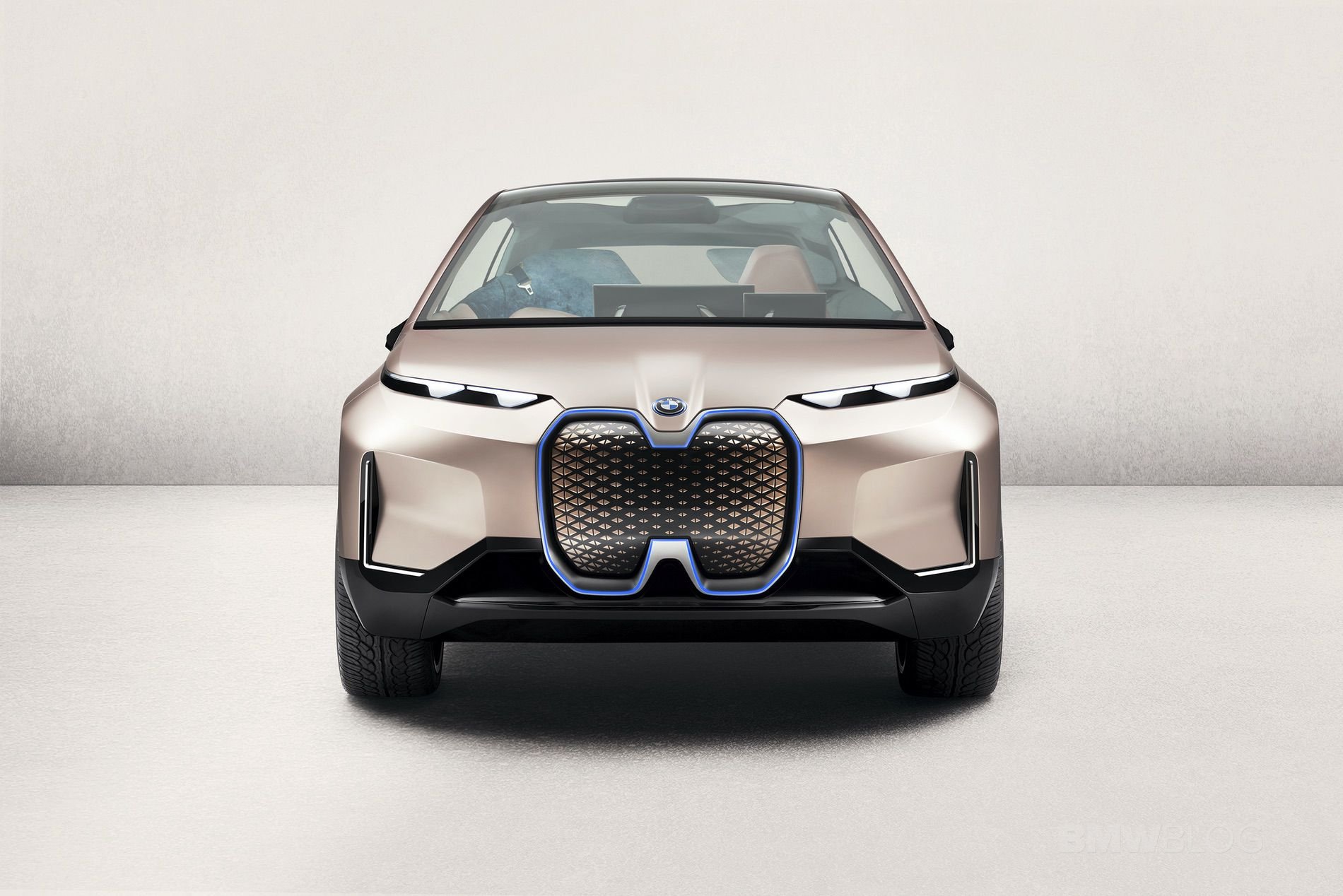
The iX was presaged by 2018’s BMW Vision iNEXT concept, an altogether futuristic electric and autonomous vehicle concept that was novel from the start. Notably, the iX’s large front snout was featured in this concept design, which carried over to the production version largely unchanged. (Sadly, the concept’s concave disc wheels didn’t make the transition.) The production vehicle arrived in 2021 and built on a dedicated architecture that combined CFRP, high-strength steel, and aluminum in one structure.
When released, the xDrive50 model shared dealer floorspace with the slightly hotter iX M60 model. Our xDrive50 version makes 516 hp, hits 0-60 mph in a quoted 4.4 seconds, and offers up to 309 miles of range.
To call the iX’s design polarizing is an understatement (the recent bruhaha at Ferrari over the Luce EV should feel familiar). In hindsight, it seems clear that the iX was really an interim rolling preview of much of the Neue Klasse design language, soon to arrive at dealers near you (though with the post GLP-1 grill making its first appearance, the oversized nose again consigned to history). And like the i3 EV before it, the iX leans heavily into sustainable interior materials, like olive leaf-tanned leather alternatives and open-pore wood.
I’ve had a couple of Mineral White Metallic BMWs over the years (including an M4 Coupe and an X5 xDrive35d, still one of my favorites), and our iX’s color combo (which I’ve affectionately deemed “Storm Trooper Chic”) flatters the SUV’s ample snout as well as any. The color does little to disguise the nose’s mass, but I’m on record as being a fan of the larger grill, with its historical allusions to earlier BMW designs. (I think it worked exceptionally well on the 4-series cars.)
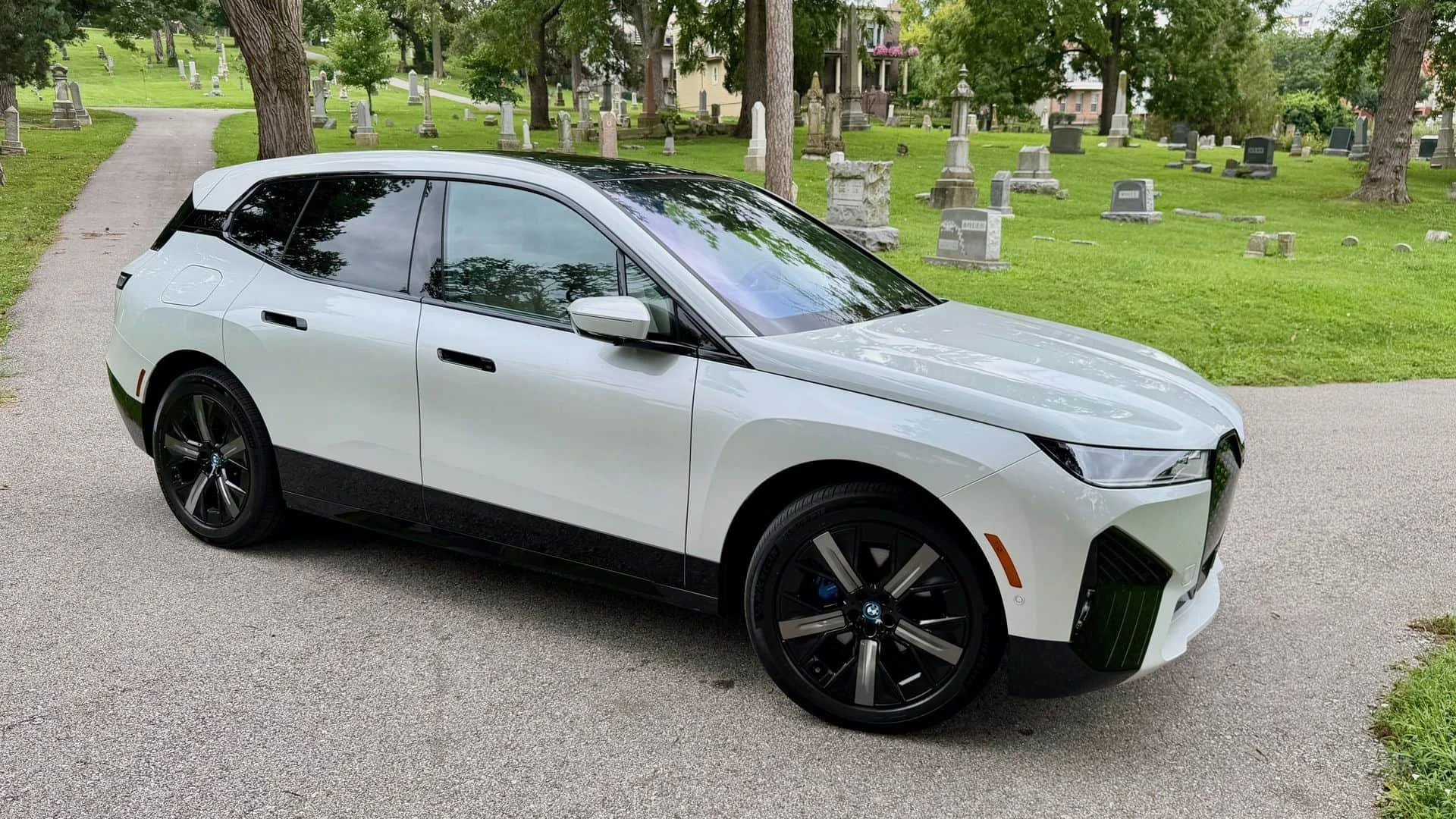
To my eye, the iX manages to be both striking and elegant, though somewhat amorphous depending on which angle you’re viewing. I find the lines behind the C-pillar to be strangely unresolved, the best elements being the sharp fold lines over the wheel arches, now arriving on several upcoming BMW designs (including the upcoming G65 X5/iX5). The front hood of the iX has dramatic, appealing scallops that highlight the top angles of the blunt nose, though the hood itself is functionally fixed. (This in itself is a packaging miss, as some sort of frunk would certainly make sense on a load-hauler of this size.)
And while I’ve never been a big fan of any of the wheel choices on the iX models, the Aero Dark Black 1011 Wheels on our vehicle are inoffensive and clearly designed for maximum aero benefit rather than pure aesthetics (the wheels on the M60 model are much bolder and more in keeping with BMW wheel designs). Overall, the exterior of the iX tends towards inoffensive rather than really memorable. It is slippery, though, with a drag coefficient of 0.25.
One minor miss to my eye (and ears) is the frameless door. While the floating window design makes for an elegant shape, the window itself, with no frame as a cradle, tends to vibrate when the door opens and shuts. It feels way less substantial and vault-like than the rest of the vehicle and is somewhat discordant on a six-figure vehicle. Since the new iX3 and iX5 each have door window frames, perhaps I wasn’t the only one to notice.
Range Anxiety? Maybe in the Cold
Any discussion of any EV, from the barest of bare bones to a luxuro-barge like the iX, seems to start and end with range, or really, range anxiety. The EPA-range of our iX is 309 miles, and I’ve been pleasantly surprised how close to that we often get. The initial thrill of any EV is straight-line speed; even the pokiest EV is quicker than most performance cars, courtesy of the instant torque endemic to electric motors. But after a short bit, the novelty wears off and other prerogatives come to the fore, namely range (with hard acceleration being one of the hungriest juice eaters).
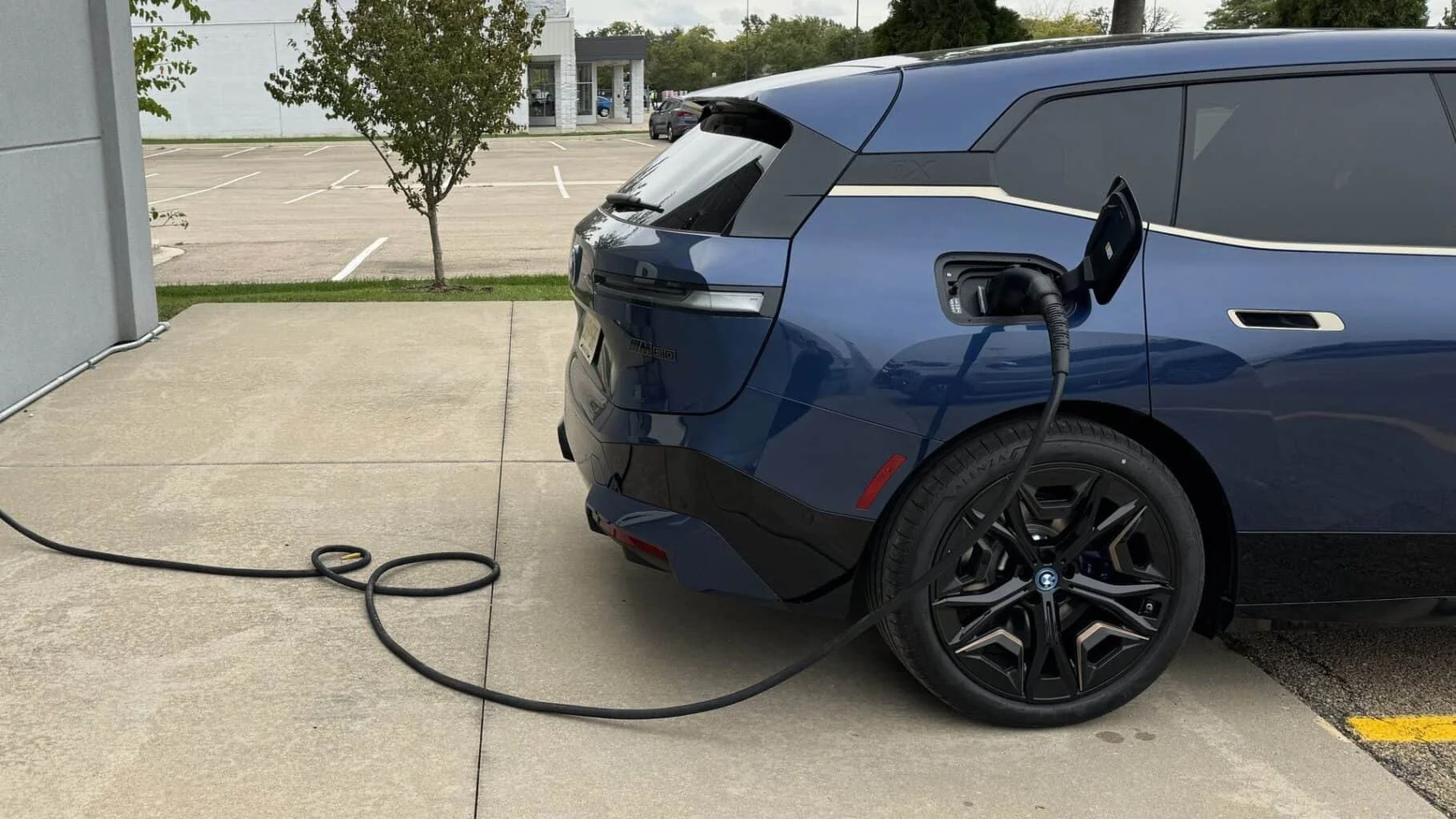
Personally, I find the whole discussion rather boring if not pedantic, but the fact is, it’s not as convenient to find an EV supercharger than it is to pull into a petrol station and quickly be on your way. I’m lucky that in my Midwestern city, there’s an Electrify America supercharger a short drive from my home, which has the added benefit of being close to one of my go-to coffee shops. So generally, once a week, I drive down, plug in, do a bit of work and have a cuppa, then be on my way.
Easy peasy. (Sadly, since we live in a condominium building, home charging isn’t as convenient as for some.) But the iX hues close to its specs in general, and I’d say we get roughly 280-300 miles on a charge.
In Winter, however, it’s a different tale. I’ve been somewhat surprised by how quickly the battery on the iX drains in sub-freezing temps. Reading about this phenomenon is one thing; seeing how quickly the meter drops based on the outside temperature is another. And, of course, charging speed is also affected, though once I got in the habit of preconditioning the battery before cold weather charging (thanks to a tip from BMWBLOG’s esteemed Publisher, Horatiu), this has been mitigated somewhat. Still, I’d say expect a 20% reduction in around-town driving range when the temp dips below freezing.
(And it’s not like I’m hammering the iX all the time. In fact, my default drive mode setting is set to Efficient, and I always drive around town using the max brake regeneration possible. So, in the end, as the saying goes, your mileage may vary.)
Sumptuous Interior
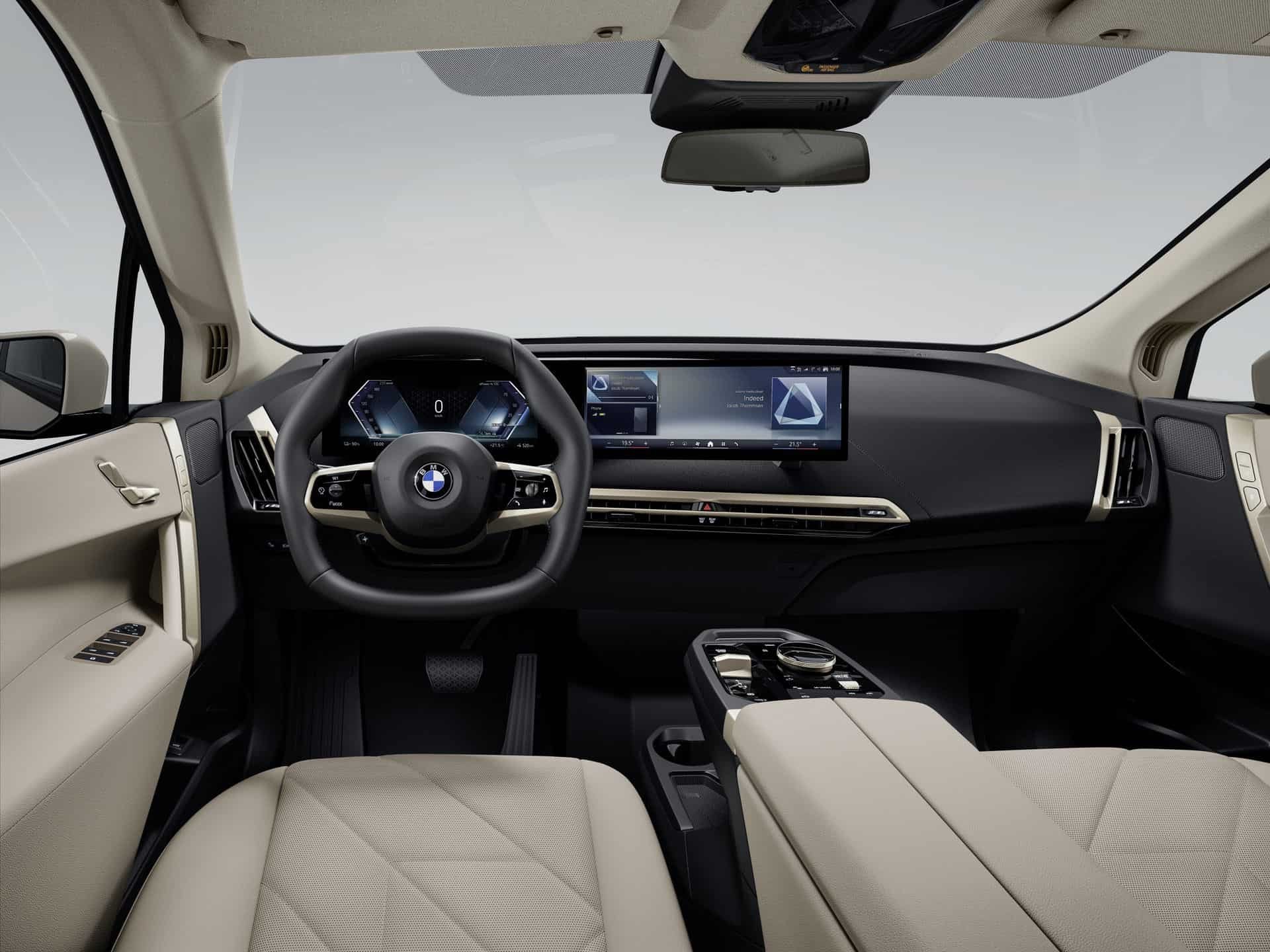
One area in which the iX absolutely excels is the interior design. Both sparse, elegant, and modern, the interior is novel in its airy sophistication, with glove-like leather, soft-touch plastics, and subtle lighting throughout. Discordant notes are few. I find the placement of the cup holders under the arm rest inconvenient, though my wife argues the point, swearing the lower placement is better for oversized water bottles (though we both find the flying buttress center stack visually striking). And the piano-black trim attracts fingerprints like a dating app, but that’s to be expected. Also, the trick electrostatic glass roof seems to have only one level of opacity regardless of which setting you choose. But all in all, those are nits. The iX’s interior is quiet, serene, and befitting of a luxury vehicle in this price range.
The technology on the iX, though, is anything but serene. I’m of the camp that never refuses an opportunity to rant about the “screenification” of modern vehicle interfaces, and the iX is certainly ground zero for this trend, with its floating glass panel dominating the cabin. But sometimes one has to go with the flow, and the iX’s enormous touch screen is responsive, bright, legible, and altogether functional. Still, I say bring back some buttons, BMW, for old time’s sake. (Though for the moment it seems, with the Neue Klasse, this ship has clearly sailed.)
All that said, I’m one of the neo-Luddites on BMWBLOG’s staff, so I’ll leave it to my colleagues to gush over the litany of features and functions baked into the iX and other modern BMWs. But grudgingly, I’ll admit that our iX’s tech is useful, usable, and well done.
Trapped Inside by Design
Mechanically, the iX has been virtually bulletproof, except for one important thing: Our iX has a recurring issue with the driver’s door release button. Almost immediately upon taking delivery, we noticed that periodically, pushing the door release button wouldn’t actually open the door. Generally, giving it another push would work, and since it was intermittent, well, out of sight out of mind. But over the Winter, the problem became frequent enough (and frankly annoying enough) that I scheduled a service appointment with our dealer.
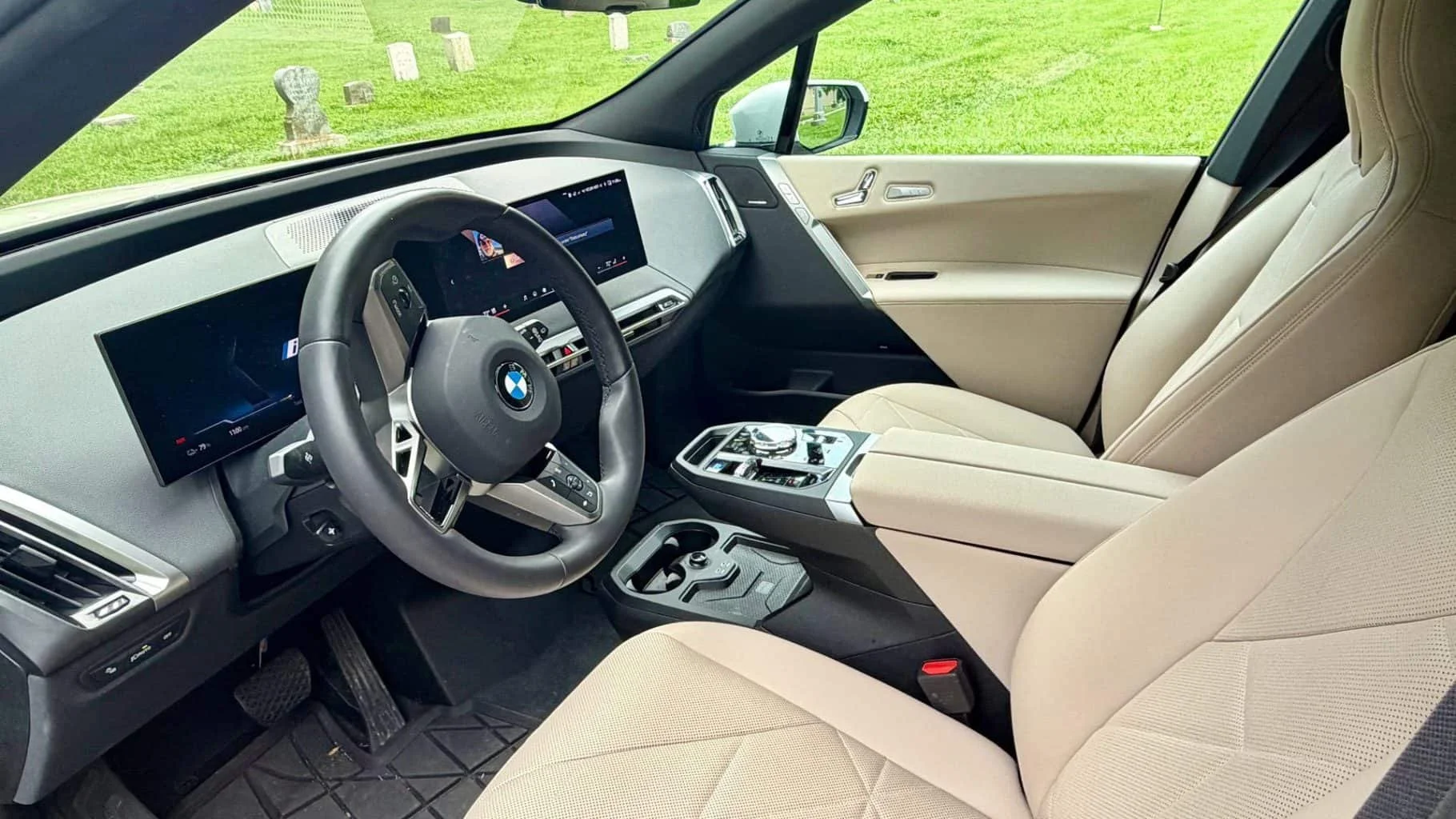
And here, gentle reader, is where I’ll go on a bit of a rant. Of all of the elements of a modern vehicle that didn’t need to be reinvented, one is most certainly the latch that you pull to open the door. There are lots of styles and designs for door latches, but they all share a basic function in common: Pull the latch which pulls the cables which release the door. Pretty darn foolproof, right? But on the iX, a seemingly arbitrary failure point has been introduced into the tried-and-true system, which could possibly trap a driver or passenger in their vehicle. Hyperbole? Nope. BMW clearly anticipated the possibility of something occurring with this button, as they provide an “emergency release” hidden under the arm rest in the door, a fact of which I was initially unaware. (That last point is not a joke; until I bothered to check out the Owner’s Manual, I was opening the window and sticking my arm out the door to pull the door handle from the outside, a disparaging look on a six-figure vehicle.)
My Service Advisor at Baron BMW diagnosed the problem as an issue with the release button itself and ordered a replacement. But it had to ship from Germany and was backordered and was estimated to be a month before the part arrived. Because this is decidedly a safety issue, the dealership kept the vehicle for the duration of the wait (since the emergency release is just that; designed only for emergencies, not regular use). The dealer thoughtfully fixed me up with a loaner iX for the duration, and they actually received the replacement part in a couple of weeks rather than four. With the new button installed and thoroughly tested by the tech, I picked up our iX and went upon my merry way.
The issue went away for an entire week before returning. The service folks warned me this was a possibility and said if it happened again, they’d have to move on to more significant diagnosis of the wiring harness of the door mechanism itself. But since my wife and I are only at the residence where this vehicle lives for a portion of the year, we just used the emergency release to get out of the vehicle, since I didn’t have the time to drop it off and wait for another fix (I’ll do that later in the Fall). But still, all of this hassle and effort and time for what I’d deem a completely unnecessary design “feature.”
(The service tech at Baron BMW told me this was the first time they’d ever seen this particular failure on an iX, so I count myself as the big winner. And hey, writing material!)
The End of a Short Era
So, what have I learned with my time in our iX? Can a dedicated “car guy” with a small fleet of ICE vehicles to his name make the transition with ease and enjoyment? The answer is a resounding yes, but with a few caveats. If I was comparing the iX to an X5 or 7-series, the comparison is easy. Each are quiet, solid, comfortable in the extreme, and exude quality. The iX wins on what I’ll call fluidity, that feeling of effortless locomotion with virtually all rough edges sanded smooth. Sybaritic even. Honestly, neither my wife nor I have bonded with the iX quite to the level we did with our most recent X5, so perhaps the iX is a too smooth?
As a pure urban hole shot champion, the iX is, well, a hoot. Like many EVs, you see a gap in traffic, you’re there, no drama. For such a large vehicle, the iX carries its unmistakable bulk like the proverbial NFL tight end, all grace and power. But physics is physics and wrenching the iX into a decreasing radius corner carrying perhaps a bit much speed is gonna result in the obvious. You can’t help to applaud the engineering that went into making such a heavy beast so light on its feet, but this is no M2 (or more charitably, an X5M). But it’s not supposed to be.
My brief with the iX wasn’t to outdo some of those nimbler rides, but more to be able to haul sizable loads in quiet and comfort and explore the average urban life of an EV (and admittedly, I wanted to experience what BMW had up its tech sleeve). And for that, I say job done. With another 18-months of stewardship in front of us, we’ll surely keep the fun rolling. Now, if I can only get the damn driver’s door to open.